Waste Disposal Rules in OX4: Who Removes Old Items?
Posted on 04/07/2026
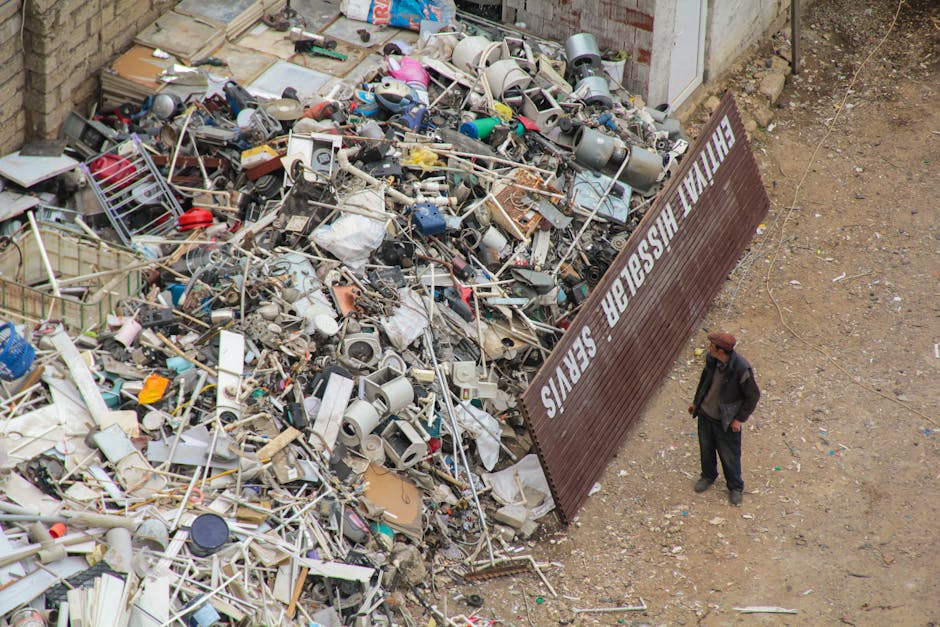
If you are staring at an old sofa, a broken fridge, a pile of boxes, or a mattress that has seen better days, you are probably asking the same practical question everyone else asks: Waste Disposal Rules in OX4: Who Removes Old Items? The short answer is that it depends on what the item is, who owns it, where it is being left, and whether it counts as household waste, bulky waste, or something that needs specialist handling. In OX4, getting it wrong can mean clutter left outside your home, extra costs, or a collection that never shows up. Get it right, and the whole thing is a lot calmer. Less hassle. Less mess. Fewer "where do we put this now?" moments.
This guide walks through the rules in plain English. You will see who usually removes old items, how disposal typically works in a local setting, what to do with bulky furniture and appliances, and how to avoid the common mistakes that trip people up. If you are moving house, clearing a flat, or just reclaiming your spare room, this should make the next step much easier.
- Why the rules matter in OX4
- How item removal and disposal usually works
- Benefits of choosing the right disposal route
- Who needs this and when it makes sense
- Step-by-step guidance
- Expert tips for smoother disposal
- Common mistakes to avoid
- Tools, resources and recommendations
- Law, compliance, standards and best practice
- Options and comparison
- Real-world example
- Practical checklist
- Conclusion
- Frequently asked questions
Why Waste Disposal Rules in OX4: Who Removes Old Items? Matters
Old items do not disappear by magic, frustratingly enough. In a busy area like OX4, disposal matters because space is tight, pavements get busy, and the wrong approach can create issues very quickly. A mattress left by the kerb, for example, can become a nuisance before you have even finished making tea. And if you are dealing with multiple items after a move, the question of who removes them becomes more than a tidy-up issue. It becomes a planning issue.
The main reason the rules matter is responsibility. In many everyday situations, the person or household that owns the item is responsible for arranging lawful disposal. If you are a tenant, landlord, homeowner, student, or business owner, your duties may be a little different, but the core idea stays the same: old items need to go somewhere appropriate, not just "out".
There is also a safety angle. Large objects are awkward, especially on narrow stairs or in older properties where every landing seems to have a turn in it. That is why people often combine disposal with removal support, especially when they are already using house removals in Cowley or arranging a clear-out before moving day. It saves time, reduces lifting, and stops the last few bulky items from hanging around for weeks.
To be fair, disposal rules can feel a bit dull until they become your problem. Then they are suddenly very interesting.
How Waste Disposal Rules in OX4: Who Removes Old Items? Works
At a practical level, there are usually five ways old items are removed in OX4. Which one fits depends on item size, condition, urgency, and whether the item is still reusable.
1. You arrange disposal yourself
This is the simplest option for lighter items or small quantities of waste. You sort, bag, and transport items to the correct disposal route yourself. It works best when you have a small car load, enough time, and no heavy lifting worries. Truth be told, this is fine for a few boxes or an old chair. It is much less fine for a damp wardrobe.
2. Council-style bulky waste collection or local collection services
For larger household items, many residents look for a bulky waste service. This is typically used for sofas, wardrobes, beds, and appliances. The important thing is to check what the service accepts, how items need to be presented, and whether separate bookings are needed for different materials. A fridge, for instance, may be handled differently from a sofa because of its components and safety considerations.
3. Private removal or man-and-van support
If you want items removed from inside the property, not just from the pavement, a private removal option is often the most convenient route. This is especially useful for flats, upstairs rooms, or properties with narrow access. If your place has the kind of staircase that makes a sofa look too wide by about a mile, you will appreciate a team that knows how to handle awkward angles. A helpful read here is how movers tackle narrow stairs in Victorian Cowley homes.
4. Reuse, donation, or resale
If the item is still in decent shape, disposal may not be the best first step. Reuse is often better for the environment and can save you money. A sofa with life left in it, a working freezer, or a bed frame in good condition may be suitable for a second home. When that is the case, it is worth looking at handling, storage, and presentation so the item does not get damaged before it leaves. For furniture care, the advice in expert sofa storage tips is surprisingly useful even if you are not actually storing the sofa for long.
5. Specialist disposal for certain items
Some old items need special care. Fridges, freezers, mattresses, broken electronics, and items with hazardous parts may need separate treatment. If you are unsure, do not guess. That is the easy way to create an avoidable problem. A little caution now is better than sorting out a mess later.
Key Benefits and Practical Advantages
Understanding who removes old items in OX4 gives you more than compliance. It makes the whole process feel manageable. You are less likely to leave disposal until the last minute, and you are less likely to end up paying extra because items were not separated correctly.
- Less stress during a move: disposal stops being a vague headache and becomes a plan.
- Cleaner handover: this matters a lot for rented homes and end-of-tenancy situations.
- Safer lifting: fewer solo attempts with heavy objects means fewer injuries and scraped walls.
- Better timing: items can leave the property when the rest of the move is already underway.
- More reuse and recycling: when items are sorted properly, some can be reused rather than wasted.
There is also a hidden benefit: mental space. A room with an old mattress leaning in the corner feels unfinished. Remove the item, and the room suddenly breathes again. Small thing, big effect.
If you are trying to simplify before a move, that same mindset applies. You may find it useful to read how to embrace minimalism before your next house move because fewer unwanted items usually means cheaper, faster disposal.
Who This Is For and When It Makes Sense
This topic is relevant to a lot of people, not just homeowners with a garage full of leftovers. In OX4, the need comes up in everyday situations that are easy to underestimate.
- Tenants ending a tenancy: you may need the property cleared completely before inspection.
- Homeowners upgrading furniture: old items need to be removed before new ones arrive.
- Students moving out: there is often a quick turnaround, and bulky items need fast decisions. If that sounds familiar, student removals in Cowley can be a useful route to think about.
- Families downsizing: there is usually a mix of reusable, donate-worthy, and true waste items.
- Small businesses and offices: office chairs, desks, archive boxes, and old equipment need separate handling.
- Landlords and letting agents: you may need a predictable clearance process between occupiers.
It makes sense whenever time is tight, access is awkward, or the item is too large for ordinary bin collections. And let's face it, most of the awkward stuff is exactly the stuff people postpone.
Step-by-Step Guidance
If you want a clean, sensible process, start here. This is the part that saves you from standing in a hallway surrounded by items you meant to deal with three days ago.
- Identify what needs to go. Split items into keep, donate, recycle, and dispose.
- Check the item type. A sofa is not the same as a fridge, and neither is treated the same as general rubbish.
- Decide whether the item can be reused. If it is clean and safe, reuse may be the best option.
- Measure access. Hallways, stairwells, door widths, lifts, and parking all affect removal planning.
- Separate hazardous or specialist items. Do not mix them with ordinary household waste.
- Choose the removal method. Self-disposal, bulky collection, or a private removal team each suit different situations.
- Prepare the item properly. Empty drawers, secure loose parts, and remove anything that could fall off in transit.
- Schedule the removal at the right time. Ideally, before cleaners arrive or before the new furniture is delivered.
If you are already planning a move, the broader sequence matters too. A structured moving plan, like the one in this stress-free house moving guide, helps you fit disposal into the rest of the job instead of treating it as an afterthought.
Small note: if you are clearing a freezer or fridge, give yourself extra time. Food waste, defrosting, and lifting wet appliances is nobody's favourite combination. That is where freezer storage during inactivity can be handy for planning the transition.
Expert Tips for Better Results
Most disposal problems do not come from the item itself. They come from poor timing, poor sorting, or trying to do too much in one go.
- Do a pre-clearout early. Start with the obvious waste before you touch the more emotional items.
- Keep tools nearby. Gloves, tape, a marker pen, bin bags, and a trolley can make a real difference.
- Don't overfill bags. Heavy bags tear, and torn bags are how rubbish ends up scattered down the path.
- Take photos of large items before removal. Useful for planning, quotes, and proving condition if needed.
- Check whether items can be dismantled. A flat-packed wardrobe is far easier to move than a full assembled one.
- Use professional help for awkward lifting. Heavy or fragile items can go badly wrong quickly, so a two-person lift is often the sane choice. If you need solo lifting guidance, the article on raising heavy items safely offers practical pointers.
One more thing: if your old items are part of a larger furniture move, a removal team with furniture experience can make disposal and relocation feel like one tidy process rather than two separate battles. That is often the difference between "sorted" and "still dealing with it next week".

Common Mistakes to Avoid
The most common mistake is leaving old items outside without checking whether that is actually acceptable. In a shared street or block, that can quickly turn into an eyesore, and sometimes a complaint. Not ideal.
Other mistakes crop up all the time:
- Assuming every item can go together. Sofas, mattresses, electronics, and fridges often need separate handling.
- Forgetting access issues. A collection team may not be able to take an item from the exact place you imagined.
- Not draining or defrosting appliances. Wet floors and heavy appliances are a bad mix.
- Leaving disposal until moving day. That usually creates time pressure and unnecessary stress.
- Trying to lift bulky items without help. Back strain is not worth saving ten minutes.
- Ignoring recycling possibilities. Some items that look like waste may still have useful life left.
Another sneaky one is underestimating hidden costs. Extra labour, awkward access, special disposal categories, or urgent timing can all influence the price. If you want to avoid that trap, this guide to hidden moving costs in Cowley is well worth a look.
Tools, Resources and Recommendations
You do not need a garage full of equipment to manage old item disposal well. A few sensible tools make the process much easier.
| Tool or resource | Why it helps | Best use |
|---|---|---|
| Gloves | Protects hands from dirt, splinters, and sharp edges | Any clear-out or dismantling job |
| Trolley or sack truck | Reduces carrying strain | Fridges, boxes, small furniture |
| Strong tape | Keeps doors, drawers, and loose parts secure | Wardrobes, cabinets, appliances |
| Marker pen and labels | Makes sorting faster | Multi-room clear-outs |
| Measuring tape | Helps confirm whether items will fit through access points | Stairs, lifts, flats, tight hallways |
| Removal planning service | Useful when the item is large, heavy, or time-sensitive | Moves, office clearance, bulky waste |
For people who want a more hands-off approach, it is often worth using a removal company that can coordinate clearance with transport. Services such as man and van in Cowley or removal services in Cowley can suit different volumes and timelines, especially if you do not have the vehicle or time to handle it yourself.
If you are dealing with a full home clear-out rather than one or two items, removals in Cowley may be a better fit because the load, access, and disposal needs can be planned together. Simple, but not simplistic.
Law, Compliance, Standards, or Best Practice
Without getting lost in legal jargon, the safe rule is this: waste should be disposed of responsibly, and old items should not be dumped in a way that creates environmental harm, obstruction, or nuisance. In the UK, householders and businesses are generally expected to use lawful disposal routes, separate recyclable materials where practical, and take extra care with items that may contain chemicals, electrical components, or hazardous parts.
That is the plain-English version. The details can vary depending on the item and the setting, so if you are uncertain, treat uncertainty as a signal to pause and check rather than take a gamble. In shared housing or commercial settings, best practice is even more important because responsibility may be split between occupiers, landlords, or staff.
A few cautious best-practice points are worth keeping in mind:
- Do not leave items on communal land unless you know the collection arrangement.
- Keep walkways clear to avoid trip hazards.
- Separate electrical items and white goods from general waste where possible.
- Use a documented quote or booking when a private removal team is involved.
- Ask about recycling and disposal handling, especially for furniture and appliances.
If you care about lower-impact disposal, the material choice matters too. Some furniture can be reused, some broken items can be stripped for parts, and some waste is simply better handled through a process that prioritises recycling. The approach described in recycling and sustainability fits neatly with that mindset.
Options, Methods, or Comparison Table
Here is a practical comparison of the main routes people use for old item removal in OX4. There is no single best option, because life loves context.
| Option | Best for | Pros | Watch-outs |
|---|---|---|---|
| Self-disposal | Small loads, light items | Flexible, low cost if you have transport | Time, lifting, and sorting fall on you |
| Bulky waste collection | Sofas, beds, white goods | Convenient for approved items | Booking rules and item restrictions may apply |
| Private removal team | Large, awkward, or urgent items | Often easiest for stairs, flats, and multiple items | Cost can vary with access and volume |
| Reuse or donation | Usable furniture and appliances | Better for the environment, may help others | Condition and collection availability matter |
| Specialist disposal | Fridges, mattresses, electronics, damaged items | Handles tricky waste properly | May need specific preparation or booking |
In many real situations, the best answer is a mix. For example, you might donate a dining table, book removal for a sofa, and put broken boxes in general waste. That hybrid approach is often the smartest one.
Case Study or Real-World Example
A typical OX4 clear-out might look like this: a family is moving out of a terraced house, and the front room contains a worn sofa, a sideboard, an old lamp, and a fridge that has been sitting idle for months. They want the property cleared before the cleaners come in the evening. Straight away, the fridge needs separate attention because it is heavy, awkward, and should be handled properly. The sofa may be reusable if it is in decent condition, but if it is damaged or badly marked, it may be better treated as bulky waste. The lamp is a small item, but if it has wiring damage, it should not be mixed with household rubbish.
In that scenario, the winning move is usually to sort items before moving day, take measurements for access, and decide what needs specialist handling. If the family is also moving furniture into storage, using a service that understands both transport and item protection can save them from a lot of back-and-forth. For example, if a sofa needs to be held temporarily before final disposal or reuse, planning matters almost as much as lifting technique. That is where a guide like best packing methods for a smooth move becomes unexpectedly useful, because a clean, protected item is much easier to move on or pass along.
The real lesson? Most disposal stress comes from leaving decisions too late. Once the sorting is done, everything else gets easier. Usually much easier.
Practical Checklist
Use this checklist before you try to get rid of old items in OX4.
- Have I identified every item that needs to go?
- Can any item be reused, donated, or sold?
- Do any items need special handling, such as fridges or electrical goods?
- Have I checked access, stairs, parking, and lift availability?
- Have I separated sharp, heavy, or hazardous items from general waste?
- Do I need gloves, tape, a trolley, or packing supplies?
- Have I arranged the removal before cleaners or new deliveries arrive?
- Have I confirmed who is responsible for disposal in the property?
- Do I know whether a private removal team is needed?
- Have I kept pathways clear and safe while the items are still inside?
If you want one final piece of practical advice, make the first pile the easiest one. Once you start, the room changes quickly, and the job stops feeling impossible.

Conclusion
So, who removes old items in OX4? Sometimes you do, sometimes a collection service does, and sometimes a private removal team is the most sensible choice. The right answer depends on the item, the access, the timing, and whether you want the process to be quick, tidy, and low-stress. Once you know the rules and choose the right method, disposal becomes much less of a headache.
The big takeaway is simple: do not leave old items to the last minute, and do not assume every object can be handled the same way. A little planning now saves a surprising amount of effort later. And honestly, if you can clear out one bulky item without drama, the rest of the house starts to feel lighter too.
If you need help coordinating old item removal alongside a house move, a flat clearance, or a bulky furniture pickup, choosing the right support early can make all the difference.
Get a free quote today and see how much you can save.


